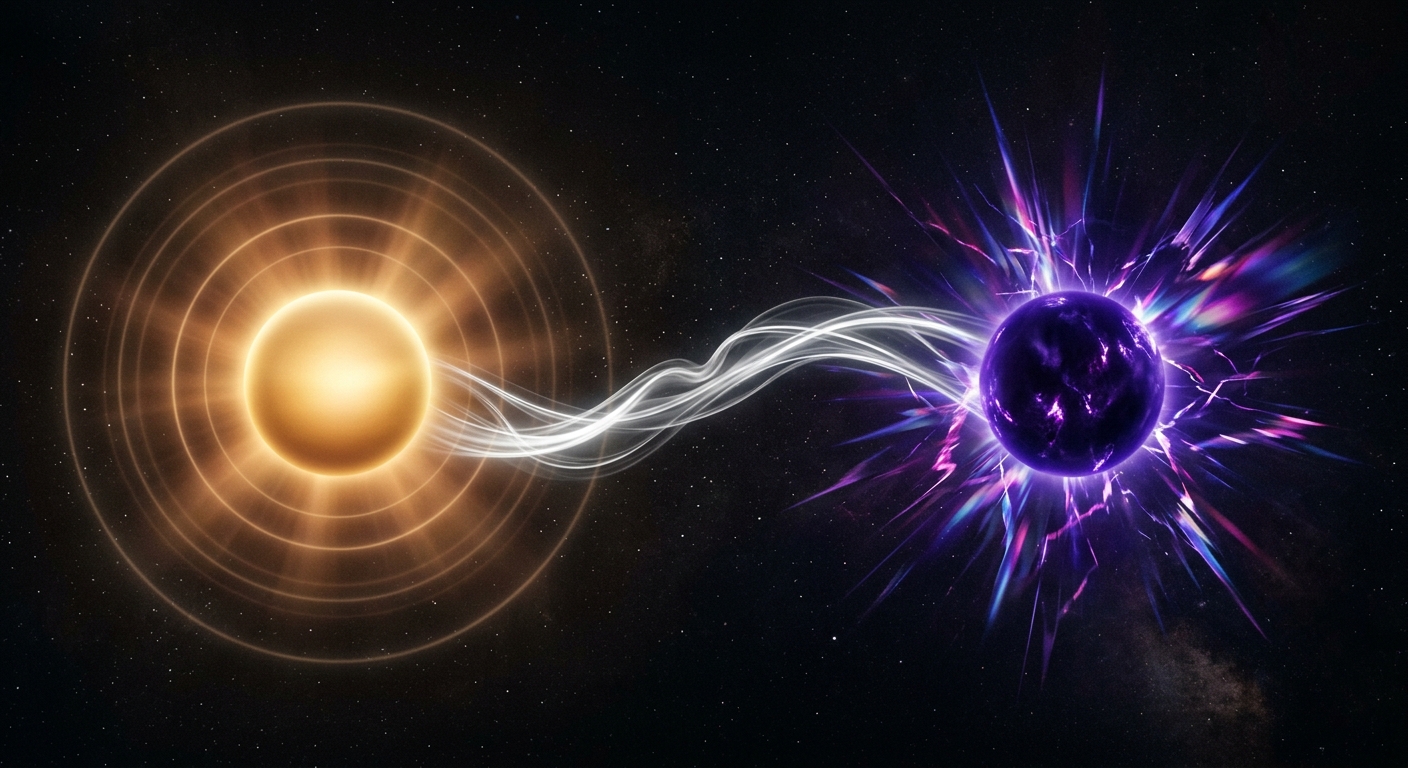
Soulmate Synastry Aspects vs. Twin Flame Indicators: What Your Chart Actually Reveals
Somewhere around 78% of people who consult an astrologer about a relationship want to know one thing: Is this person my soulmate? And increasingly, a second question follows: Or are they my twin flame? These aren't idle curiosities — they're attempts to make sense of why certain connections feel cosmically different from everything that came before. But here's the thing: the labels we attach to chart patterns matter enormously, and attaching the wrong one can keep you in something genuinely harmful.
This article takes a grounded look at what synastry astrology actually suggests about deep connections — comparing the aspect signatures associated with soulmate bonds versus twin flame dynamics, and offering a framework that respects spiritual intuition without romanticizing dysfunction.
Defining Soulmate vs. Twin Flame in Astrological Terms
Before we compare chart patterns, we need honest definitions — because popular culture has muddied both terms almost beyond recognition.
In astrological tradition, a soulmate connection describes a relationship with deep compatibility, mutual recognition, and a sense of belonging. These are relationships that sustain you. They often carry karmic weight — a sense that these two people have met before, in some form — but they're fundamentally characterized by ease, growth, and reciprocity. Think of them as relationships that make you more fully yourself.
The twin flame concept is newer and less codified astrologically. It describes a connection so intense it feels like looking into a mirror — and anyone who's looked honestly into a mirror knows that's not always comfortable. Twin flame dynamics are typically characterized by obsessive attraction, repeated separation and reunion cycles, triggering of deep psychological wounds, and a sense of spiritual urgency that can override rational judgment.
The critical distinction: soulmate connections tend to build you. Twin flame connections tend to break you open — which can be valuable, or devastating, depending on where you are in your development and whether both people are actually doing the work.
A proper synastry chart interpretation requires holding both possibilities simultaneously rather than rushing toward whichever label feels more romantic.
Classic Soulmate Synastry Signatures
Venus-Jupiter, Sun-Moon, and Descendant Contacts
Certain aspect combinations appear with notable consistency in long-term, mutually supportive relationships. These aren't magic bullets — one aspect doesn't define a connection — but clusters of these signatures are worth recognizing.
Sun-Moon conjunctions or trines are arguably the most classic soulmate indicator in synastry. When one person's Sun illuminates the other's Moon (or vice versa), there's an organic emotional attunement that doesn't require constant explanation. These people get each other. The trine version flows effortlessly; the conjunction can feel fated and magnetic, with slightly more intensity.
Venus-Jupiter contacts deserve more attention than they typically receive. When one person's Venus conjuncts or trines the other's Jupiter, there's genuine joy in the relationship — a sense of expansion, generosity, and mutual appreciation. I think this is one of the most underrated synastry aspects for long-term happiness, precisely because it lacks the dramatic charge of Pluto or Uranus contacts. But sustainable relationships need joy, not just intensity.
Descendant contacts are particularly significant. The Descendant — the cusp of the 7th house — represents the qualities we seek in a partner, the 'other' we're drawn to complete ourselves with. When someone's personal planet (Sun, Moon, Venus, Mars) lands on your Descendant, there's an almost uncanny sense of recognition: this is what I've been looking for. It's worth exploring these contacts in any synastry chart compatibility analysis you run.
Sun-Venus aspects create warmth, affection, and genuine appreciation. Moon-Venus conjunctions produce emotional sweetness and care. And Saturn contacts — often misread as obstacles — frequently appear in relationships built to last. (More on Saturn shortly.)
The signature of a soulmate connection in synastry isn't fireworks. It's resonance.
Twin Flame Synastry Indicators
Pluto Aspects, 12th House Overlays, and Vertex Contacts
Now we move into more complex territory — and I want to be careful here, because this is exactly where spiritual frameworks and psychological reality can diverge in damaging ways.
Pluto aspects are the most commonly cited twin flame indicators, and they're genuinely powerful. When one person's Pluto aspects another's Sun, Moon, or Venus — especially by conjunction or opposition — the relationship carries a transformative charge that's hard to describe to someone who hasn't experienced it. There's obsession, depth, a sense of being seen in ways that feel almost intrusive. Pluto strips away pretense. The question is whether what's underneath is something you can build on, or just raw wound.
12th house overlays create one of the most spiritually charged dynamics in synastry. When your partner's planets fall in your 12th house, the relationship activates your hidden self — your unconscious patterns, your fears, your spiritual longings. It can feel transcendent. It can also feel destabilizing, because the 12th house operates below conscious awareness. Many people describe 12th house overlay relationships as feeling 'fated' or 'karmic' precisely because the connection bypasses their rational defenses.
Vertex contacts deserve serious attention in any discussion of fated connections. The Vertex is sometimes called the 'second Descendant' — a point associated with significant fated encounters. When someone's personal planet conjuncts your Vertex (especially in tight orb), many astrologers interpret this as a destined meeting. Whether that destiny is joyful or difficult is another question entirely.
Uranus aspects — particularly conjunctions to personal planets — create the electric, can't-stop-thinking-about-them quality often attributed to twin flames. Uranus connections feel exciting and liberating initially, but they can also indicate instability and an inability to settle into ordinary domestic reality.
And then there are the karmic aspects in synastry — North and South Node contacts — which bridge both categories and deserve their own section.
The Role of Nodal Axis Aspects in Both Connection Types
The lunar nodes — North Node and South Node — represent the soul's evolutionary trajectory across lifetimes (or, if you prefer a non-literal interpretation, the psychological patterns we're moving toward and away from in this life). Their role in synastry is genuinely fascinating and applies to both soulmate and twin flame dynamics.
South Node conjunctions create an almost eerie sense of familiarity. When someone's planet (especially Sun, Moon, or Venus) conjuncts your South Node, you feel like you know them — like you've always known them. This is the 'past life connection' people describe. It's comfortable, sometimes unnervingly so. But South Node connections can also encourage regression: returning to familiar patterns rather than evolving toward your North Node's potential.
North Node conjunctions have a different quality — more purposeful, sometimes more uncomfortable. These relationships push you toward growth. They can feel destabilizing because they're pulling you into unfamiliar territory. But they tend to leave you more developed than they found you.
Both soulmate and twin flame connections frequently feature strong nodal contacts. The difference is often in which other aspects accompany them. A South Node conjunction paired with Venus-Jupiter harmony suggests a warm, familiar soulmate dynamic. The same South Node conjunction paired with Pluto opposition and 12th house overlays? That's a recipe for the kind of connection that rewrites your psychological architecture — for better or worse.
For a deeper look at how karmic patterns show up in charts, the most important synastry aspects for long-term connections are worth understanding alongside these nodal contacts.
Comparing Synastry Strategies: Soulmate vs. Twin Flame Patterns
| Strategy | Best For | Pros | Cons | ROI (Relational) |
|---|---|---|---|---|
| Soulmate Aspects (Venus-Jupiter, Sun-Moon, Descendant contacts) | Long-term partnership, family building, mutual support | Sustainable joy, emotional safety, genuine compatibility | Can lack the dramatic intensity some people mistake for depth | High — consistent happiness over time |
| Twin Flame Indicators (Pluto aspects, 12th house overlays, Vertex contacts) | Transformative growth, shadow work, spiritual awakening | Deep self-knowledge, psychological growth, spiritual intensity | High risk of toxicity, codependence, repeated painful cycles | Variable — transformative if both parties are healthy, destructive if not |
| Nodal Axis Aspects (North/South Node contacts) | Karmic resolution, evolutionary partnerships | Sense of purpose, past-life recognition, growth catalyst | South Node can encourage stagnation; North Node can feel destabilizing | Medium-High — depends heavily on individual readiness |
| Saturn Synastry (Saturn to personal planets) | Committed, structured, long-term relationships | Durability, responsibility, mutual growth through challenge | Can feel restrictive if one person is less mature | High — Saturn is the planet of lasting structures |
| Uranus/Neptune Contacts | Excitement, spiritual connection, unconventional bonds | Electric chemistry, spiritual rapport, sense of uniqueness | Instability, illusion, difficulty sustaining in ordinary reality | Low-Medium — beautiful but often unsustainable alone |
Can One Relationship Show Both Patterns?
Absolutely — and this is where the framework gets genuinely interesting.
Many of the most significant relationships in a person's life show both soulmate signatures and twin flame indicators. You might have Venus-Jupiter trines and Pluto conjunctions in the same chart overlay. Sun-Moon harmony and 12th house overlays. North Node contacts and Uranus squares.
When this happens, what you're looking at is a relationship with tremendous depth and tremendous complexity. These connections can be the most rewarding of your life — but only if both people have the psychological maturity to work with the intensity rather than being consumed by it.
The balance of aspects matters. If the harmonious, stabilizing aspects (Venus-Jupiter, Sun-Moon, Descendant contacts, supportive Saturn) form a foundation, then the intense Plutonian or 12th house elements become fuel for genuine transformation within a stable container. But if the chart is predominantly Pluto oppositions, 12th house overlays, and South Node conjunctions with very few stabilizing aspects? That's a relationship asking you to examine your patterns — not necessarily a life partnership.
This is also why using a reliable synastry chart calculator to get an accurate picture of the full aspect landscape matters more than fixating on one or two dramatic contacts.
Red Flags Disguised as Intensity: When 'Twin Flame' Is Just Toxicity
This section exists because I've watched people stay in genuinely harmful relationships for years, insisting the pain is 'just the twin flame journey.' It's the most important thing I'll say in this article.
Here's the thing: Pluto aspects are real. 12th house overlays are real. The psychological intensity they generate is real. But psychological intensity is not the same as spiritual destiny, and suffering is not the same as growth.
The signs that 'twin flame intensity' may actually be a toxic dynamic:
The transformation only flows one way. In genuine transformative relationships, both people grow and change. If you're doing all the psychological work while the other person remains static (or actively resistant), that's not twin flame dynamics — that's an imbalanced relationship that's consuming your energy.
The 'intensity' includes consistent disrespect or harm. Pluto conjunctions can produce obsessive depth, yes. They can also produce controlling behavior, jealousy, and psychological manipulation. Not all Pluto contacts are equal, and the person's actual behavior matters more than their chart placements.
The 'runner-chaser' cycle never resolves. Twin flame mythology includes the concept of one person 'running' and one 'chasing.' In practice, this dynamic — when it continues indefinitely — is a trauma bond, not a spiritual initiation. Healthy relationships, however intense their chart signatures, move toward increasing stability over time.
The relationship only feels 'spiritual' when you're apart. If the connection feels transcendent in absence and chaotic in presence, that's attachment anxiety speaking, not cosmic alignment.
Look, the charts don't lie — but our interpretations of them absolutely can. For a more psychologically grounded look at how charts reveal relational dynamics, exploring Chiron in synastry often illuminates wound-based attraction patterns that masquerade as fated connection.
A Balanced Framework for Evaluating Deep Connections
Best Practices for Reading Soulmate and Twin Flame Synastry
1. Look at the whole chart, not one dramatic aspect. A single Pluto conjunction doesn't make a twin flame connection. A single Venus-Jupiter trine doesn't guarantee a soulmate bond. You're reading an ecosystem, not a single data point.
2. Weight the stabilizing aspects appropriately. In my experience, people consistently undervalue harmonious aspects (trines and sextiles) because they lack the emotional charge of squares and oppositions. But sustainable deep connections require both — the intensity to maintain engagement and the harmony to maintain safety.
3. Distinguish the natal chart from the synastry. Sometimes what feels like a 'twin flame connection' is actually your own natal chart speaking. If you have a Pluto-heavy natal chart, you'll experience most significant relationships as intensely Plutonian. The other person's chart isn't creating that — your own wiring is.
4. Track behavior over time. Aspects describe potential and tendency, not destiny. A Mars-Pluto conjunction in synastry can manifest as passionate depth or as control and aggression. What actually manifests tells you more than the aspect alone.
5. Use Saturn as a litmus test. As noted in research on Saturn's role in long-term compatibility, Saturn contacts — while not glamorous — are consistently present in relationships that endure. If a chart has intense Pluto and Uranus contacts but no stabilizing Saturn signature, ask whether this connection has the structural integrity to sustain what it's asking you to go through.
Measuring What Matters: Key Metrics for Deep Connection
If you're trying to evaluate a relationship through a synastry lens, these are the indicators worth tracking — not as a scorecard, but as a map:
- Reciprocity of growth: Are both people changing and developing?
- Aspect balance: What's the ratio of harmonious to challenging aspects? Neither all-easy nor all-difficult is ideal.
- Nodal direction: Are the nodal contacts pushing both people toward their North Nodes, or anchoring them in South Node patterns?
- Outer planet contacts: Uranus, Neptune, and Pluto aspects to personal planets add intensity and complexity. They're not inherently bad, but they require conscious handling.
- House activations: Which houses does your partner's chart activate in yours? 4th and 7th house activations suggest partnership and home; 12th house activations suggest depth but also hidden complexity.
- Chiron contacts: Healing and wounding dynamics that can indicate whether the relationship serves your growth or your wounds.
Optimizing for Your Actual Goals
Different people want different things from relationship astrology, and the framework you use should reflect your actual goals.
If you want long-term partnership, weight the stabilizing, harmonious aspects heavily. Venus-Jupiter contacts, Sun-Moon connections, Descendant placements, and supportive Saturn are your primary indicators. The presence of some challenging aspects is healthy and normal — they create the friction that generates growth. But they shouldn't dominate the picture.
If you want transformative experience, the intense Pluto and 12th house contacts will deliver. Just go in with your eyes open about what transformation actually requires — sustained effort, psychological honesty, and a willingness to face your own shadows without blaming the other person for triggering them.
If you want karmic resolution, nodal contacts are your clearest indicators. But pay attention to which node is being activated and whether the relationship is asking you to evolve or to return to comfortable (but limiting) old patterns.
And if you want all of the above — well, that's the most complex chart to read, and it's worth getting a real synastry chart compatibility analysis rather than relying on a single aspect interpretation.
The most honest thing I can offer is this: the chart patterns associated with 'soulmate' and 'twin flame' connections are real, and they do describe meaningfully different relational dynamics. But no aspect pattern overrides free will, psychological maturity, or the basic requirement that both people show up with honesty and care. Your next step is straightforward — map the full synastry, look at the complete picture, and then let the relationship's actual behavior confirm or complicate what the chart suggests. The stars illuminate. They don't decide.